Synth Bloom
Plants used to prefer classical music, but in the 1970s their tastes shifted towards the pure tonal sound of the electronic synthesizer, and no one really knows why.
In the British sitcom Good Neighbors, an old neighbor introduces Tom and Barbara Good to the legacy side of plant music culture:
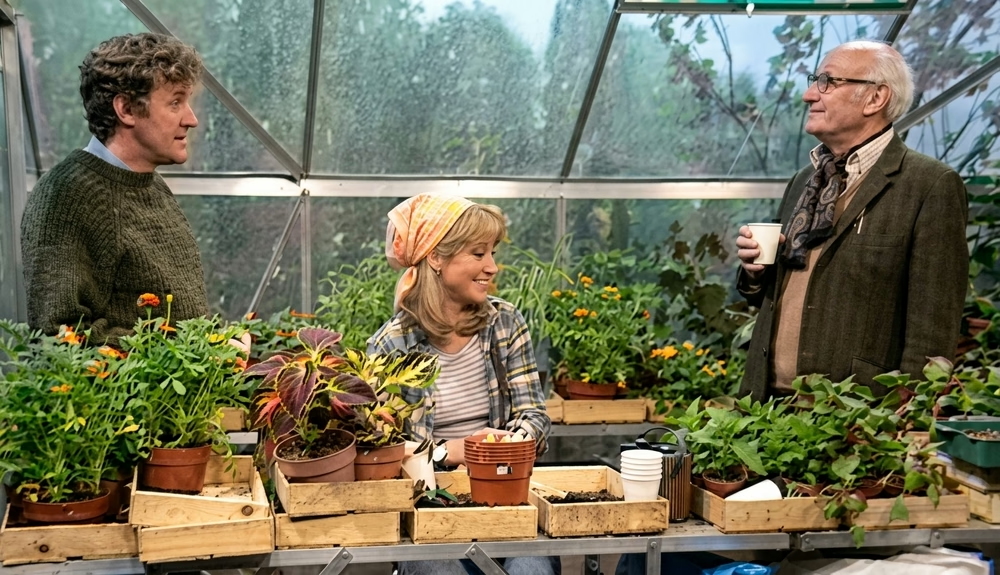
Good Neighbors, season 3, ep. 4, ‘I Talk to The Trees’
- Tom [listening]
- Ah — Delius! We love Delius!
- Mr Wakefield
- I’m not keen on him, actually; but the tomatoes love him.
Mr. Wakefield’s little protest aside, clearly his plants’ tastes in music overlapped considerably with his own. He was probably born in, what, 1911? Of course any plants that hung out with him were going to prefer Delius to Dylan. But that episode aired in 1976, and plants’ shift away from orchestral music had already progressed pretty far.
Dr. Miltein’s Music to Grow Plants was released in 1970. If you listen closely to the first half-second before the music starts, you hear a high-pitched tone, which carries through the music:
Plants were shocked and intrigued by this pure, synthetic tone, which has no analogue in nature. They never really went back, and they took things to considerable extremes before their tastes moderated.
By 1975 the envelope had been pushed far enough that Jerry Cammarata released Plant Serenade an entire album whose every track consisted only of one tone played continuously at a single frequency. You can listen if you like; La Monte Young’s Composition 1960 #7 is nothing next to it. Even so: they put a violin player on the cover to lure in the remaining classical partisans.
Later, Baroque Bouquet came out with their own Plant Music, a balanced blend of wet acoustic sound with synthesized tones, kinder to the less avant-garde plants:
Then, in 1976, Mort Garson released the all-Moog Mother Earth’s Plantasia and modern plant music had fully arrived:
Plants date back to the dawn of time, but apparently, they loved the Moog, never mind that the synthesizer had been on the market for just a few years. Most of all, the plants loved the ditties made by composer Mort Garson.
Plants have never really looked back. Even now, fifty years later, a search of “plant music” on a streaming service these days will generally turn up playlists full of dewy, crystalline synthesized music set in a major key. They are even playing it themselves.